Free vs Private Healthcare in South Africa: What You Need to Know
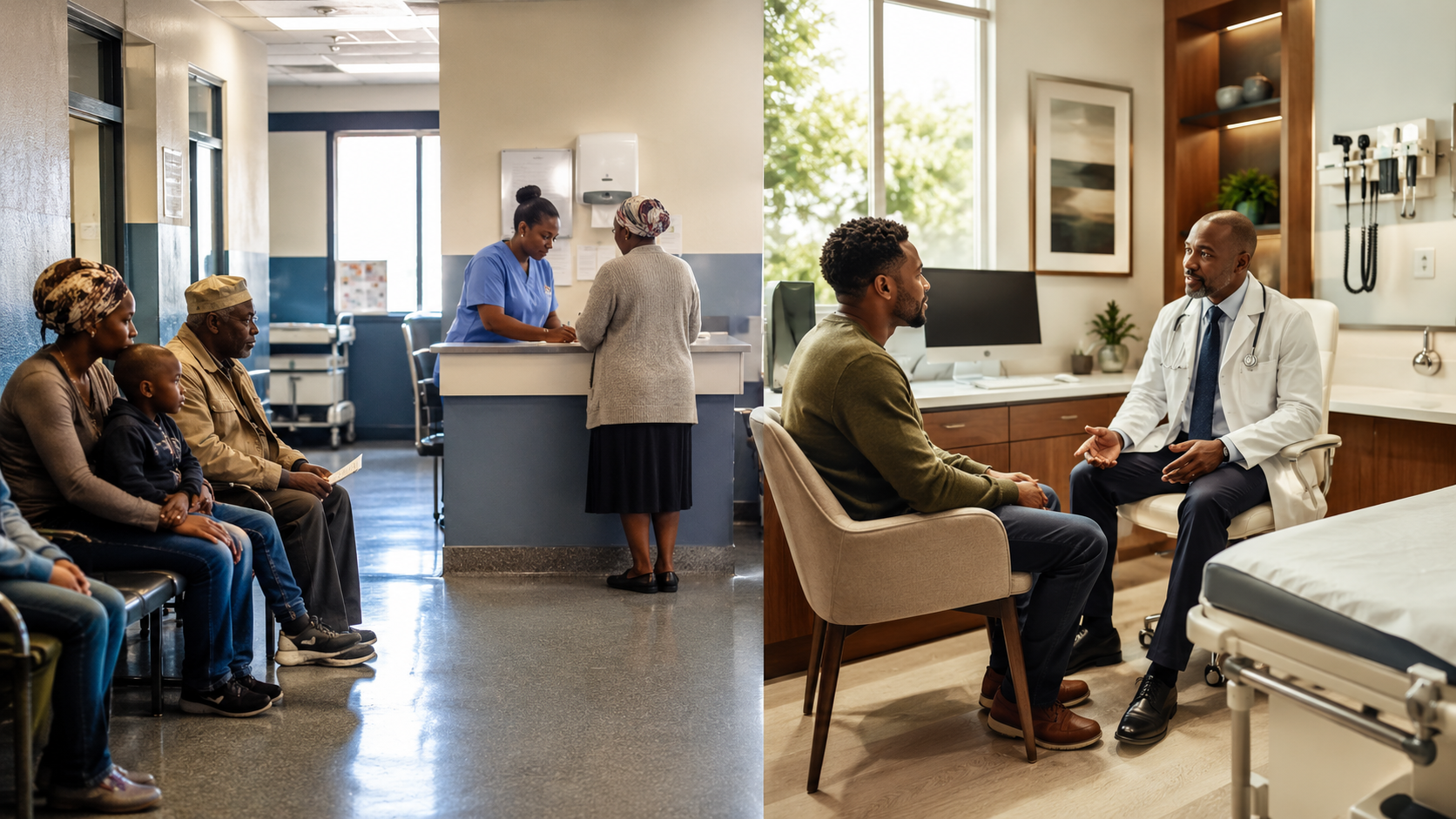
Healthcare in South Africa can feel confusing because people often speak about “free healthcare” and “private healthcare” as if they are two completely separate worlds.
But for many families, the reality is more mixed.
You may use a public clinic for everyday care, a private GP when you can afford it, a public hospital for emergencies, or medical aid for some services but not others. You may also move between public and private care depending on money, urgency, location and what service you need.
This guide explains the basic difference between public and private healthcare in South Africa, what each one can offer, and what you should know before making decisions.
What is public healthcare?
Public healthcare is healthcare provided by government facilities such as public clinics, community health centres and public hospitals.
These services are mainly funded by the state. This means that many people can access care at little or no cost, depending on the service, the facility and the person’s circumstances.
Public healthcare is used by millions of South Africans every day. It includes services such as:
- clinic visits
- immunisations
- pregnancy care
- HIV and TB care
- chronic medication
- emergency care
- public hospital treatment
- referrals to specialists through the public system
Public healthcare is essential because it gives people access to care even when they cannot afford private fees or medical aid.
What is private healthcare?
Private healthcare is healthcare provided by private doctors, private hospitals, private specialists and private healthcare companies.
It is usually paid for through:
- medical aid
- health insurance
- direct cash payment
- employer benefits
- hospital plans or other cover
Private healthcare is often faster and more comfortable, especially for appointments, specialist care and planned procedures. But it can also be expensive.
A private consultation, scan, specialist visit, hospital admission or procedure can cost a lot if you do not have proper cover.
Is public healthcare really free?
Not always.
Many people use the phrase “free healthcare” when they mean public healthcare. Some services may be free, especially at clinic level or for certain groups. But public hospitals may still apply fees depending on the person, the service and the rules used by that facility.
Even where the actual healthcare service is free or low-cost, patients may still carry other costs, such as:
- transport to the clinic or hospital
- taking time off work
- food while waiting
- childcare while attending appointments
- paying for documents or copies
- buying medication if it is unavailable
- travelling again if referred elsewhere
So when we speak about “free healthcare,” we must remember that access is not only about the consultation fee. It is also about whether people can realistically get to the service and receive care in time.
Why do people use public healthcare?
People use public healthcare for many reasons.
For some, it is the only affordable option. For others, public facilities may be closest to home. Some public hospitals also provide specialist services that may not be easily available elsewhere, especially for serious conditions, trauma, maternity care, psychiatric care, TB, HIV and emergency services.
Public healthcare can be life-saving and highly skilled. Many excellent healthcare workers work in public facilities.
But the public system is also under pressure. Patients may experience long queues, staff shortages, limited beds, delayed appointments, medicine stock issues or referral delays.
Why do people use private healthcare?
People often use private healthcare because they want quicker appointments, more choice, shorter waiting times or access to private hospitals and specialists.
Private healthcare may feel easier to navigate when you have medical aid or money available. You can often choose a doctor, book an appointment and receive results or referrals more quickly.
But private healthcare also has limits.
Medical aid may not cover everything. Some plans have networks, co-payments, exclusions, waiting periods and annual limits. A person may still receive unexpected bills even when they thought they were covered.
Private does not always mean “no stress.” It often means you must understand your cover very carefully.
Public healthcare vs private healthcare: the real difference
The biggest difference is usually how the service is funded and accessed.
Public healthcare is funded mainly by the state and aims to serve the broader population.
Private healthcare is paid for privately, often through medical aid or direct payment, and is usually accessed through private doctors, hospitals and specialists.
In simple terms:
Public healthcare is based on public access and need.
Private healthcare is based on private payment or cover.
But both systems still have duties. Patients must still be treated with dignity. Emergency care must still be taken seriously. Healthcare workers must still act ethically. Patients must still receive information and be allowed to ask questions.
Can a public hospital turn you away?
A public facility should not simply ignore or dismiss a person who needs help. But public facilities also work according to levels of care, triage, referral pathways and available resources.
This means you may be assessed and then referred elsewhere if:
- the service is not available at that facility
- you need a different level of care
- your condition is not an emergency
- another facility is more appropriate
- you need a clinic instead of a hospital
- you need specialist referral through the correct process
The important thing is that patients should receive clear information about why they are being referred, what they must do next and where they must go.
Can a private hospital refuse you?
Private hospitals are different from public hospitals because they operate as private businesses. They may require medical aid authorisation, payment arrangements or confirmation of cover for non-emergency treatment.
But emergency medical treatment is different.
In a true emergency, the issue should first be assessment and stabilisation. A patient should not be left without urgent care simply because payment is unclear.
After stabilisation, transfer or payment discussions may follow, depending on the situation.
What about emergency care?
Emergency care is not the same as routine care.
In South Africa, no one may be refused emergency medical treatment. This is important because emergencies can happen to anyone, whether they have medical aid or not.
Examples of possible emergencies include:
- severe chest pain
- difficulty breathing
- signs of stroke
- serious injuries
- severe bleeding
- severe allergic reaction
- seizures
- pregnancy emergencies
- an unconscious person
- a baby or child who is seriously ill
Emergency care does not mean you can demand any treatment at any facility at any time. But it does mean that urgent, serious conditions must be assessed and treated appropriately.
What if you cannot afford private healthcare?
Many people feel ashamed when they cannot afford medical aid or private care. But healthcare costs are high, and many working families are under pressure.
If you cannot afford private healthcare, start by understanding what public services are available near you.
You can also:
- know your nearest clinic
- know your nearest emergency centre
- keep your clinic card or hospital number safe
- keep a list of chronic medication
- know emergency numbers
- ask about referral processes
- keep copies of important medical documents
- ask questions before leaving a facility
Planning does not remove every problem, but it can help you move through the system more clearly.
What if you have medical aid but still use public healthcare?
This happens more often than people think.
A person may have medical aid but still use public healthcare because:
- the public hospital is closer in an emergency
- the private hospital needs authorisation
- the medical aid plan has limits
- the person is referred through public services
- the condition is better managed in a public specialist service
- the person cannot afford co-payments
Having medical aid does not mean every healthcare problem becomes simple. You still need to understand your plan, benefits and exclusions.
Questions to ask before choosing care
Before deciding where to go, ask yourself:
- Is this an emergency?
- Is the person stable?
- Is there severe pain, bleeding, breathing difficulty or danger?
- Do I need a clinic, GP, emergency unit or specialist?
- Do I have medical aid cover?
- Does my plan require a network provider?
- Can I afford the consultation or co-payment?
- What is the nearest appropriate facility?
- Do I need a referral?
If it is an emergency, do not delay because of confusion. Seek urgent help.
Red flags that need urgent attention
You should not wait at home if someone has:
- chest pain
- difficulty breathing
- signs of stroke
- serious injury
- severe bleeding
- repeated seizures
- sudden confusion
- loss of consciousness
- severe burns
- pregnancy complications
- severe dehydration
- a baby who is unusually weak, blue, floppy or struggling to breathe
When in doubt, seek urgent help or call emergency services.
Final thought
Public healthcare and private healthcare both have a place in South Africa.
Public healthcare is essential because it carries the responsibility of serving people who may have no other option. Private healthcare offers choice and speed for those who can pay or who have cover.
But the most important thing is this:
You deserve clear information, respectful treatment and safe care.
Whether you are in a public clinic, public hospital, private GP room or private emergency unit, you are still a person. You are allowed to ask questions, understand your options and know what steps to take next.
Sources used
- Constitution of the Republic of South Africa, 1996: Bill of Rights
- National Health Act 61 of 2003
- Council for Medical Schemes: Prescribed Minimum Benefits information
- National Health Insurance Act 20 of 2023